Skip to content


The case for non-toxic activewear starts with a simple question: if you think carefully about what you eat and drink, why not what you wear? Especially during movement, when your skin is at its most absorbent.

The fabric between you and the world
We think carefully about what we eat, what we drink, what we breathe. But skin is our largest organ, and it is in contact with our clothes for hours every single day — during movement, during rest, during sweat. The conversation about what goes into those clothes is one most of us have never been invited into.
Fast fashion has made clothing cheaper and more abundant than at any point in human history. That speed comes at a cost. To produce garments quickly and at scale, manufacturers rely on a complex toolkit of synthetic dyes, finishing chemicals, preservatives, and performance treatments — many of which remain in the fabric long after it arrives in your hands.
Choosing non-toxic activewear — made from natural fibres without harmful chemical finishes — is one of the most direct ways to reduce your daily chemical load. But first, it helps to understand exactly what you're reducing it from.
The chemicals
Six things commonly found in fast fashion fabrics
Used to make fabrics wrinkle-resistant, shrink-proof, and permanently pressed. Classified as a known human carcinogen, it can trigger skin irritation, rashes, and respiratory issues with repeated skin contact and inhalation.
Linked to: skin sensitisation · respiratory irritationAmong the most widely used synthetic dyes globally. Certain azo dyes break down to release aromatic amines — compounds linked to bladder cancer and classified as carcinogenic under EU regulation, though global enforcement varies widely.
Linked to: carcinogenic aromatic amines · allergyPer- and polyfluoroalkyl substances create the water- and stain-resistant finishes common in activewear. They accumulate in the body and environment, and are associated with hormone disruption, immune suppression, and increased cancer risk.
Linked to: hormonal disruption · bioaccumulationUsed in fabric processing and dyeing. NPEs are endocrine disruptors that mimic oestrogen. They persist in the environment and have been found in waterways near garment factories and in the bodies of textile workers.
Linked to: endocrine disruption · aquatic toxicityAdded to activewear to prevent odour. A registered pesticide absorbed through the skin and detectable in human blood, breast milk, and urine. Linked to thyroid dysfunction and contributing to antimicrobial resistance.
Linked to: thyroid disruption · skin absorptionUsed to soften synthetic materials in accessories and prints. Well-documented hormone disruptors, particularly concerning during pregnancy. They leach from fabric with heat and friction — exactly the conditions of exercise.
Linked to: reproductive toxicity · developmental harmWhy activewear is higher risk
Movement changes everything
When we move, we sweat. Sweat is slightly acidic and warm — one of the most effective chemical solvents our bodies produce. Research shows that sweating in synthetic activewear significantly increases the rate at which chemical residues migrate from fabric into skin.
The skin also becomes more permeable during heat and exercise, meaning absorption is not just higher — it is faster. The very conditions that make activewear relevant are the same ones that make the chemistry inside it most important.
Conventional activewear is also designed for compression and extended skin contact. Unlike a jacket worn loosely over other layers, leggings and sports tops sit directly against some of the body's most absorbent areas, continuously, for hours at a time.
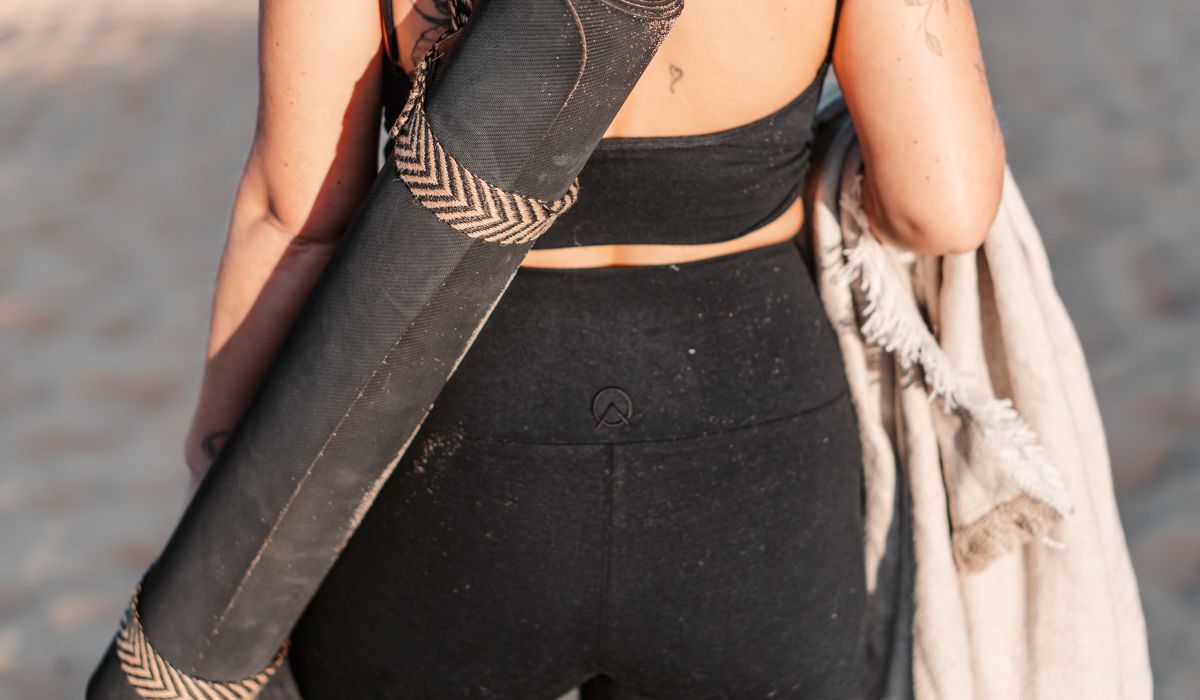
At ZONE, our hemp clothing is made from either 100% natural fibres (non-stretch styles) or 95% natural fibres with 5% spandex (stretch styles) — no PFAS finishes, no triclosan, no formaldehyde treatments. Hemp is naturally odour-resistant and becomes softer with every wash, without any chemical assistance.
 What to look for as a consumer
A practical guide to choosing non-toxic activewear
Six things worth knowing
Read fibre content labels. Natural fibres — hemp, organic cotton, linen, merino — require far less chemical processing than synthetics. 95%+ natural content is a meaningful threshold. It is what we hold ourselves to at ZONE.
Look for OEKO-TEX Standard 100 certification. This tests for over 100 harmful substances including formaldehyde, heavy metals, and pesticides. Our hemp and organic cotton blends are OEKO-TEX certified — you can read more on our sustainability and transparency page.
Be cautious of "performance" and "anti-odour" claims. These often signal PFAS finishes or antimicrobials. Ask brands what chemistry sits behind those claims. Hemp is naturally anti-odour — no treatment required.
Wash new garments before wearing them. This removes surface-level chemical residues from manufacturing. Cold water is sufficient — hot water can set certain dyes and break down fibres faster.
Choose slow over fast, where you can. Brands producing at high volume under extreme price pressure have less room for safer, higher-quality inputs. Fewer, better pieces is a health choice as much as an environmental one.
Ask the question. Brands with nothing to hide welcome it. Brands that cannot answer their supply chain questions clearly are telling you something important too. We publish ours at zonebylydia.com/pages/sustainability-transparency.

Progress over perfection
We say this at ZONE not as a disclaimer, but as a genuine belief. Switching everything overnight is not realistic for most people — and it is not what we are asking. What we are asking is that you start to notice. To bring the same awareness you might give your food or your environment to the question of what you wear during movement.
The shift to non-toxic activewear is not about perfection. It is about small, intentional choices that compound over time. The leggings you wear four days a week matter more, chemically, than the dress you wear once a month.
We are honest about where we are in our own journey — including the 5% spandex we currently use for stretch, and our active work toward plant-based alternatives. You can read the full picture on our sustainability and transparency page.
What touches your skin matters. We built a brand on that belief. And the more you know, the easier it becomes to make choices that genuinely support your body — not quietly work against it.
Made to bring you back to yourself.
Non-toxic activewear made from natural fibres, for movement, rest, and all the quiet moments in between.
Shop Hemp Clothing Our Transparency