Skip to content


ZONE has always been built on transparency, and we take our fabrics seriously. Making clothing from natural fibres that give back to the earth, and that still performs, is not an easy challenge to take on. Plenty of brands never see where their fabric is made, let alone visit the mills that knit it together. For me, caring about what you wear means knowing every step of how it's made. I'd wanted to visit our fabric mill for a long time to really understand the process, and last week I finally got to see it, from start to finish.
I travelled to Qingdao, China, to visit Hemp Fortex, one of the mills that make the hemp fabric for our activewear. They've been making hemp textiles since 1999, and they built a Museum of Hemp on site to tell the story of the fibre.
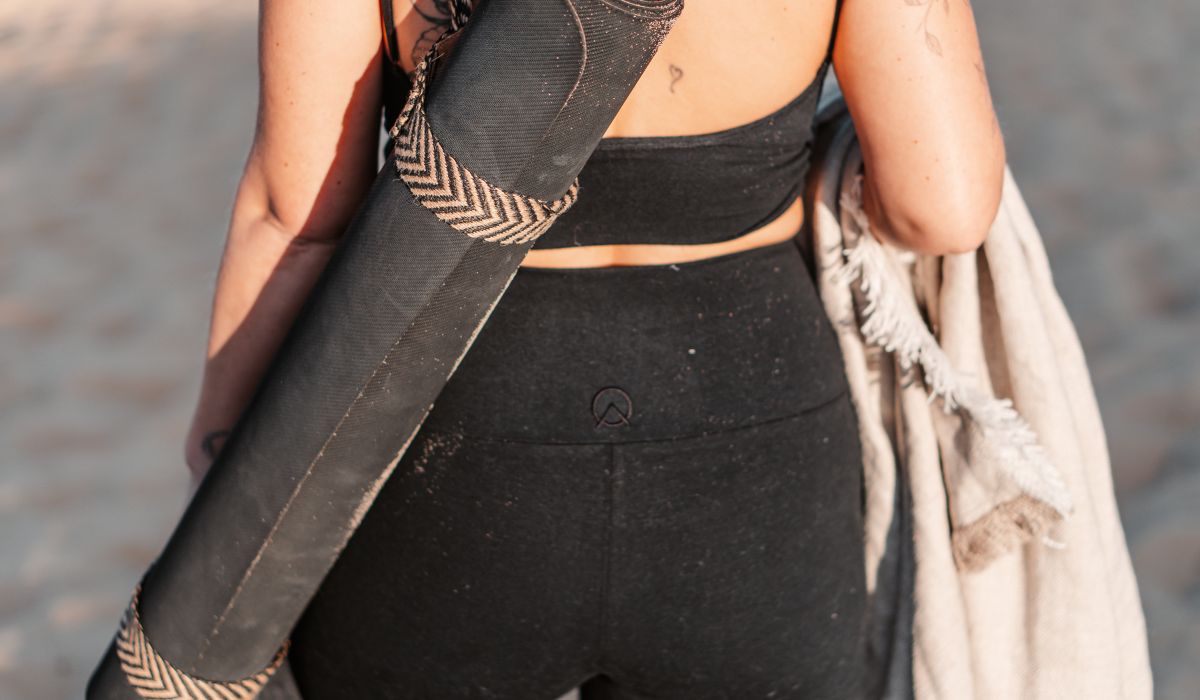
I got to hold raw hemp straight from the bale. I watched it being washed, combed and spun into yarn. Then I stood beside the knitting machines as that yarn became fabric, the same fabric that ends up in the garments you've grown to love, like our hemp leggings, flares and bike shorts. Seeing it go from fibre to garment was one of the coolest experiences I've had in this business so far.
How Hemp Fabric Is Made, Step by Step
Hemp is one of the oldest textile fibres in the world. The museum at Hemp Fortex reminds you it was first domesticated in China around ten thousand years ago. What I saw at the mill was that ancient fibre meeting modern know-how.
1. Raw fibre
It starts as golden-brown bast fibre from the stalk of the hemp plant. It feels coarse, a bit like natural rope.

2. Washing
The fibre is washed with enzymes, which break down the natural gums and plant matter holding it together. This step is called degumming. You can see it starting to soften and lighten.

3. Natural or bleached
Here the fibre takes one of two paths. Fibre for undyed fabric is left natural, keeping hemp's soft, creamy beige colour, and it skips the bleaching step altogether. Fibre that's going to be dyed is bleached first. Raw hemp carries its own natural pigment, so dye on top of it comes out dull, muddy or uneven. Bleaching gives a clean, even base so the dye takes properly and the colour comes out true, especially for lighter and brighter shades.
4. Combing and cottonising
Next the fibre is opened up and combed until it's soft, fine and fluffy. This step is called cottonising, because it makes hemp gentle enough to spin like cotton. Honestly, it felt like holding a cloud.

The museum lines up each stage in glass jars, from rough short fibre to soft cottonised hemp in both natural and white.

One shelf in the museum tells the whole story: raw fibre on the floor, fibre at every stage in jars, and finished yarn on cones up top.

5. Spinning
The soft fibre is drawn out and twisted into yarn on the spinning floor, then wound onto cones ready for knitting.

6. Knitting
Finally the yarn goes onto big circular knitting machines and comes off as rolls of fabric, ready to be cut and sewn into ZONE pieces. Our fleece and jersey are knitted from 55% hemp and 45% organic cotton. For our Hemp Stretch range, 5% spandex is knitted in with the hemp for stretch and recovery.


From fabric to your wardrobe
And this is where it ends up. The same hemp I watched being spun and knitted, cut and sewn into the pieces you wear.


Why Hemp Is Different from the Ground Up
Hemp's story starts long before the mill. It's in the way the plant grows.

- It's not thirsty. A German study found hemp produced about six times more plant matter per cubic metre of water than cotton. Cotton needs at least 750 mm of water a season.
- It's low-input. Hemp needs comparatively little fertiliser and plant protection. The same study calls it an "undemanding" crop.
- It's good for the soil. Hemp has deep roots and is used in crop rotation to keep the soil healthy for whatever is planted next. The museum walls walk you through it: soil preparation, sowing, field management, rotation, harvest.
- Nothing goes to waste. The museum says hemp has around 25,000 uses, from paper and building materials to food and fabric.
And once it's a garment, hemp keeps giving. It breathes, and it gets softer every time you wash it.
Not All "Sustainable" Fabrics Are Equal
Walk through any activewear store and you'll see eco claims everywhere. Some hold up. Some don't. Here's how hemp compares with the fabrics most often sold as the green choice.
| Fabric | Sold as | The catch |
|---|---|---|
| Hemp | A natural plant fibre | It's the real deal. A low-water, low-input crop, enzyme-washed and combed into fibre, then spun like cotton. |
| Organic cotton | Natural and pesticide-free | A great fibre, and it's in our fleece and jersey too. But it's still a thirsty plant. |
| Bamboo | A fast-growing natural plant | Most "bamboo" fabric is actually bamboo viscose. The plant is dissolved in harsh chemicals, including carbon disulphide, then re-formed into fibre. |
| Recycled polyester | Plastic bottles given a second life | It's still plastic. Only about 2% comes from old clothes, and one study found it shed around 55% more microplastics in the wash than virgin polyester. |
| Lyocell (Tencel) | Made from wood | One of the better options, with a closed-loop process. But it's still wood pulp chemically dissolved and re-formed, not a fibre straight from the plant. |
The big one for activewear is recycled polyester. It sounds like a win, but you're still wearing plastic against your skin. Every wash sends tiny fibres down the drain and into our waterways, and eventually our oceans. As a surfer, that one hits close to home.
Hemp keeps it simple. It grows easily, it's washed and combed rather than dissolved, and a garment made from plant fibres like hemp and organic cotton can break down at the end of its life.
What People Ask Us
Is ZONE fabric bleached? Only when it's going to be dyed. Undyed pieces stay hemp's natural creamy colour and skip bleaching altogether.
What is cottonising? It's the combing step that opens hemp's long, coarse fibres into a soft, fine fibre that can be spun like cotton.
Is there any plastic in ZONE? Our fleece and jersey are 55% hemp and 45% organic cotton, with no synthetics. Our Hemp Stretch pieces include 5% spandex, knitted in for stretch and recovery.
Why This Matters for ZONE
I started ZONE because I wanted activewear that felt as good for the planet as it did on my body. Standing in that mill, I could trace every step of our fabric with my own hands. That's the kind of transparency I want you to have too.
When you pull on ZONE, you're wearing plants. Hemp that grew without much water, gave back to the soil, and was turned into fabric by people who have been perfecting this craft for decades.
Read next: My Journey to Jaipur: The 100% Hemp Collection
Sources: ATB Potsdam, 2020 · SBS News on bamboo viscose · The Ethos on the Changing Markets Foundation study · Hemp Fortex Museum of Hemp, Qingdao